


/file/publisher-c1a3f893382d2b2f8a9aa22a654d9c97/2021/01/3a0b812279e2bb82b5ef35f930f64c40.jpg)

Reject 70-acre reclamation project, NGO urges Penang CM
Protect Karpal Singh Drive Action Committee chairperson AD Chandrasekaran said their concerns are based on scientific evidence that the Middle Bank’s marine ecosystem would be harmed.
The Middle Bank is a...
Summary
AD Chandrasekaran urges the Penang government to reject a 70-acre coastal reclamation of the Middle Bank as part of the Jelutong Landfill rehabilitation project.
The Protect Karpal Singh Drive Action Committee chairperson says the plan would harm the marine ecosystem in the Middle Bank, a seagrass-rich area in Penang’s South Channel.
He also urges Penang Chief Minister Chow Kon Yeow to gazette the Middle Bank as a marine sanctuary.
A group has urged Penang Chief Minister Chow Kon Yeow to reject a 70-acre (28.3ha) coastal reclamation which is part of the Jelutong Landfill rehabilitation project.
Protect Karpal Singh Drive Action Committee chairperson AD Chandrasekaran said their concerns are based on scientific evidence that the Middle Bank’s marine ecosystem would be harmed.
The Middle Bank is a seagrass-rich area located at Penang’s South Channel, between the island and mainland.
“While we recognise the urgent need to address the legacy of the decades-old landfill, the developer’s plan to reclaim a significant portion of our coastline to house massive recycling machinery is a drastic and unnecessary measure.
“It flies in the face of established scientific understanding and successful global precedents,” Chandrasekaran said in a statement today.
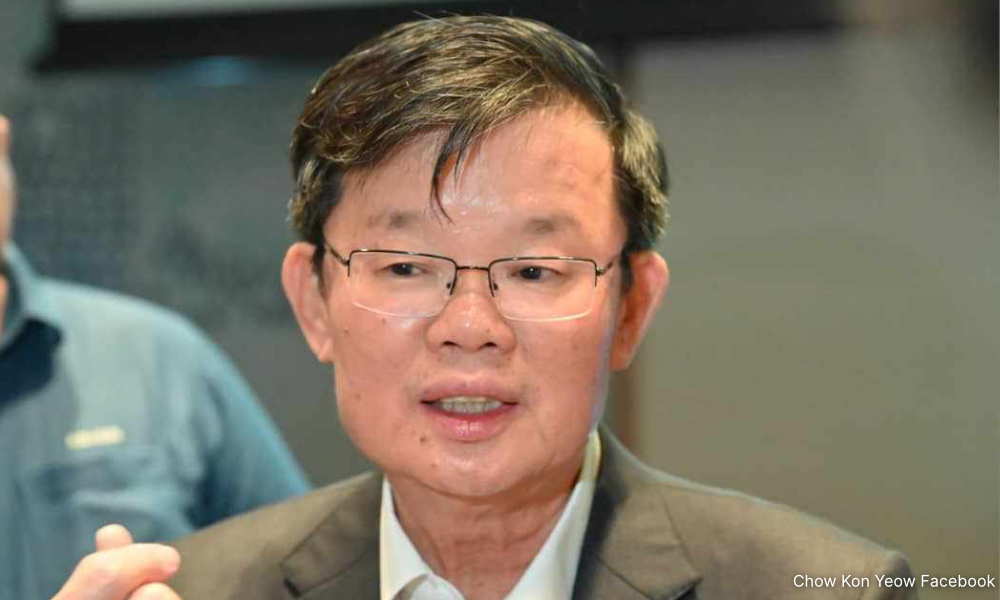
On March 24, Chow said reclamation is an essential step to dismantle the old Jelutong landfill, which has been in use since the early 1970s and is exceeding its capacity.
“The contractors are to remove all the rubbish and clean up the site.
“The reclaimed site would be where they would recycle rubbish that was dumped at the landfill,” Free Malaysia Today reported him as saying.
In 2020, the state government and Penang Development Corporation signed a deal with PLB Engineering Bhd to develop and rehabilitate the Jelutong landfill for RM1 billion.
According to a state assembly reply in November, PLB is to prepare a new site for waste disposal on the rehabilitated site.
A waste-to-energy plant, where refuse is incinerated and turned into power, was also being considered by the state.
Loss of marine life
On that note, Chandrasekaran said the proposed large-scale coastal reclamation would cause irreparable damage to marine ecosystems at the Middle Bank, which is a thriving marine sanctuary.
He also said the scientific consensus was that such projects disrupt vital marine habitats, alter natural sediment flows, and trigger significant ecological imbalances, leading to long-term biodiversity loss.
READ MORE: Jelutong reclamation risks vital ecosystem, it's not the only threat
“Furthermore, locating intensive waste recycling operations on newly reclaimed land will inevitably subject our communities to unacceptable levels of toxic gases, dust, noise pollution, and heavy industrial traffic, severely impacting our quality of life,” he claimed.
As for the scale of the project, the NGO leader pointed out that the developer’s environmental impact assessment (EIA) report confirms Phase 1 of the project can occur within the existing 90-acre landfill site, without the need for an immediate 70-acre expansion.
“Extending timelines to between five and 10 years would allow phased processing, eliminating the need for 70 acres of reclamation,” Chandrasekaran noted.
Meanwhile, he urged Chow to gazette the Middle Bank as a marine sanctuary to preserve the area’s ecological balance for future generations.
“We must also protect residents from the detrimental impacts of dust, noise, and increased industrial traffic associated with large-scale recycling operations on reclaimed land.
“And the state must demonstrate sustainable leadership by becoming forward-thinking landfill rehabilitation, showcasing a commitment to balancing economic progress with environmental stewardship and social responsibility.”
/file/publisher-c1a3f893382d2b2f8a9aa22a654d9c97/2025/03/3fdeba5de0aa8374df7f7fadc72dda59.jpg)
/file/1346/e0f39d769f60c9c0b21f496900a66649.jpeg)
/file/publisher-c1a3f893382d2b2f8a9aa22a654d9c97/2024/02/89679b54120e9cb39832f48bcccca7f2.jpg)
/file/publisher-c1a3f893382d2b2f8a9aa22a654d9c97/2023/05/542e795ae7c2560bfdd367939c4bb561.jpg)


Are you sure you want to delete this comment?
This action cannot be undone.